This page compiles past blog posts which compared 2 or more similar expressions, explaining the difference between/among them.
- All
- XXX vs YYY
しりません vs わかりません
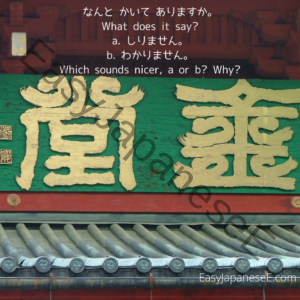
しりません is often believed to be the equivalent of "I don't know" in English, but しりまã�...
青い vs 青の
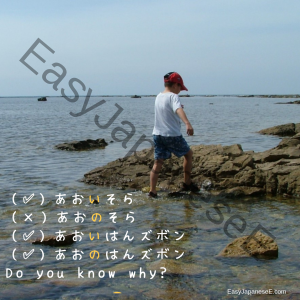
This post explains when 青い (adjective) and 青の (noun + の) are interchangeable or not. The s...
そして vs それから vs それで

そして, それから and それで all can be used at the beginning of a sentence and can mean "a...
かえるときでんわしてね vs かえったときでんわしてね

~とき is used like the English "when ~" but depending on what comes before とき, the nuance ...
“何 (What)” – “なに” vs “なん”
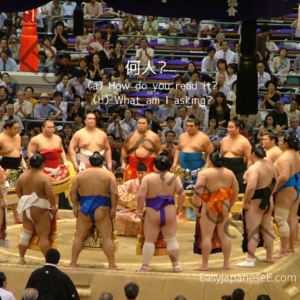
何 meaning "what?" is sometimes pronounced なに and なん at other times. This post explains whe...
~まで vs ~までに
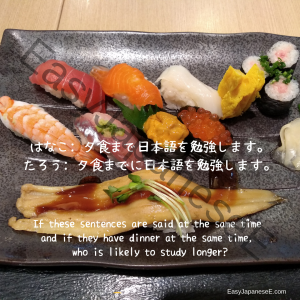
~まで and ~までに are both used with a time phrase and they look almost the same. However, ...
しりません vs しっていません

The English verb "to know" is usually translated as しっています in Japanese but the opposite,...
うれしい vs たのしい

うれしい and たのしい can be used to describe a "happy" feeling, but they are not always int...
~くなる vs ~になる
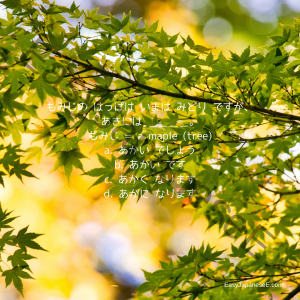
なります is the most common word that describes a change from one state to another. Depending on...
ふとい/ふとる/ふとっている/ふとくなる

Today's topic is difference betweenふとい and ふとる. If you understand this difference, you w...
~がたい vs ~づらい vs ~にくい
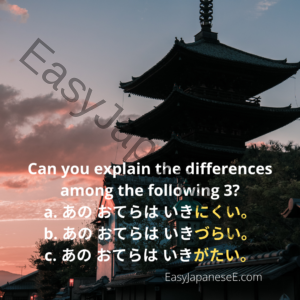
~がたい、~づらい、~にくい are all usually translated as "difficult to ~" or "hard...
~あいだ vs ~あいだに
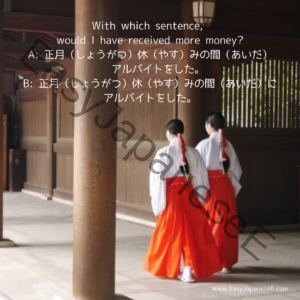
~あいだ can be used like a English conjunction "while" but adding に afterwards or not changes...