This page compiles past blog posts which compared 2 or more similar expressions, explaining the difference between/among them.
- All
- XXX vs YYY
~てから vs ~たから
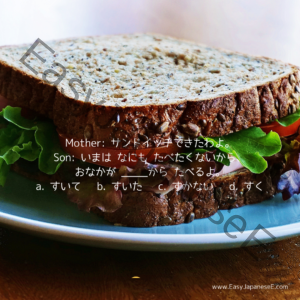
から has many meanings but all beginners need to remember the difference between ~てから and ...
~あと/あとで/あとに/あとは
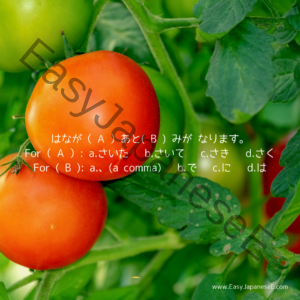
~あと means "after ~" and it is used after a past plain form verb and depending on the particl...
およそ、ぐらい、ごろ、やく
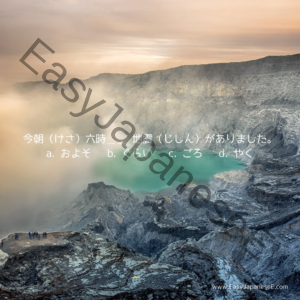
Today's post is about how to say "approximately" in Japanese. Some are used before a number phrase a...
~おき(に) vs ~ごと(に)
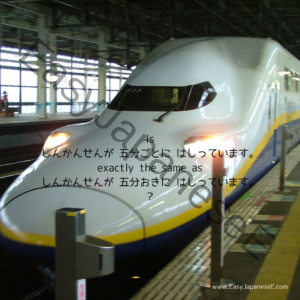
~ごと and ~おき are similar and sometimes they are interchangeable but other times they are ...
しっています vs わかります
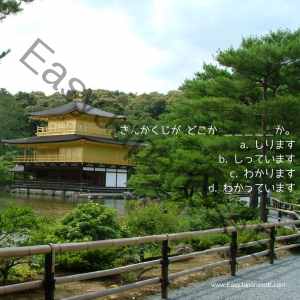
Many English speakers seem to think しっています = to know and わかります = to understand...
にぎやか vs いそがしい
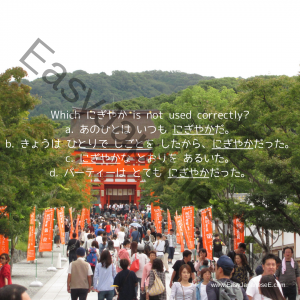
Both にぎやか(な) and いそがしい are usually translated "busy" but the meanings are ve...
~する vs ~している

You had a busy day and you feel tired. Which one would you say to your family when you get
大きい vs 大きな
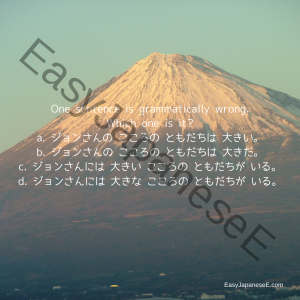
One sentence is grammatically wrong. Which one is it? 大おおきい and 大おおきな both mean ...
~と vs ~とき vs ~たら
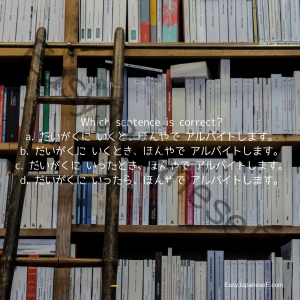
All ~と, ~とき and ~たら can be used for “when ~” but their meanings are quite diff...
さむい vs つめたい
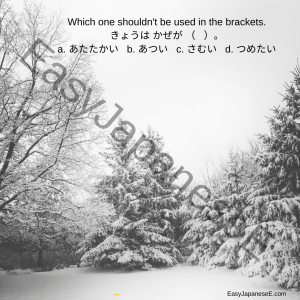
The English word "cold" needs to be distinguished between さむい and つめたい in Japanese. Th...
か vs と vs や
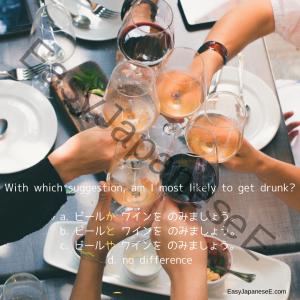
Particles are tricky. This post explains the difference among the particles か, と and や that ar...
会う vs 合う
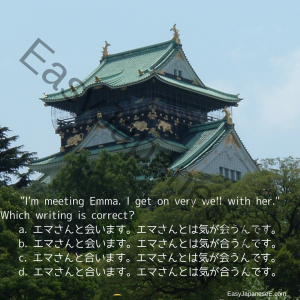
Both 会う and 合う are read as あう and they look alike, so even Japanese native speakers some...