![[Appendix Tips] – an insider guide to Kyoto, an ancient capital](https://www.easyjapanesee.com/wp-content/uploads/2023/02/IMG_5657-scaled.jpg)
Kyoto became the capital of Japan in the year 794 and had been the capital until Emperor Meiji unofficially moved to Tokyo in 1868. There are so many historical sites, Shinto shrines and Buddhism temples. Kyoto is a major destination for Japanese tourists as well as visitors from overseas.
It is full of traditions but at the same time, Kyoto hosts the headquarters of many world-famous tech companies such as Kyocera, Nintendo, Omron, etc. People in Kyoto have uniquely balanced their love for old things and new things.
I was born and raised in Kyoto, spent half of my life there and many of my family and friends live there, so I go back regularly and I thought I might write a chapter about Kyoto!
Getting Around in Kyoto
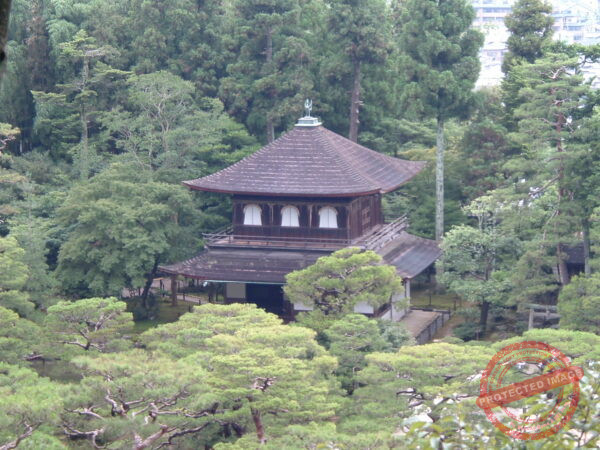
The best way to get around in Kyoto would be walking! Although the distance is not that short, if you walk, you will see a lot of hidden gems along the way. If you walk along the eastern edge of the city proper from Ginkakuji (Silver Pavilion) Temple in the north to Tofukuji Temple in the south. famous landmarks such as Nanzenji Temple, Chion_in Temple, Yasaka Shrine, Kodaiji Temple, Kiyomizu Temple, etc. are all along the route (A bit too ambitious to visit them all in one day). I recommend walking from north to south as the city slopes that way, although this route I am talking about goes up and down quite a bit.
If you are moving around in a wider area, buy a 1-day pass of the Kyoto City bus for 700 yen. It allows you unlimited travel within the outer city limit on the city bus for a day. One trip costs 230 yen, so if you are going to use a bus 4 times or more, it is worth it (or you can get on a bus even for a short trip)! A Kyoto City bus usually has a 2-tone green body and displays its route number in the front as well as near the entrance. A bus with its route number against a blue or orange background runs within the city limit only. Some buses have their route number against a white background and they go beyond the city limit and in that case you’ll have to pay for the outer travel even if you have a one-day pass.
One-day passes are sold onboard or in most convenience stores. Sold passes do not have any date set, so you can buy a few in advance and validate one on the first bus ride for the day, which will print the date on the back. After the first ride, you show the date to the driver on the way in or out of the bus. If you are not using the pass, you can pay the fare with coins (most buses have a change maker which exchanges a 1000-yen note with coins.) You can also use an IC card, such as Ikoka and Suica to pay the fare.
On popular routes, buses run every five minutes or even less. The only drawback is when it is busy, the traffic jams are very bad as well. In that case, you can use subways and/or private train lines (Hankyu, Keihan, Eizan, etc.).
Kyoto City Subway is very simple with only 2 lines (karasumi-line and to-zai (east to west) line) but if your destination is close to a station, you can certainly avoid traffic jams. They also sell a subway one-day ticket for 800 yen and a subway and bus combined one-day ticket for 1100 yen. Please note these tickets cannot be used for private underground train lines such as Hankyu (which runs under Shijo Street) and Keihan (which runs under Kawabata Street).
The word you might like to know
one-day ticket = ichi_nichi_ken
Must-see in Kyoto
- Kinkakuji – Golden Pavilion
- Nijo-jou – Nijo Castle
- Kiyomizudera – Kiyomizu Temple
- Fushimi Inari Shrine with 1000 torii gates
- Nishiki Market – called Kyoto’s kitchen. It’s one street north of Shijo Street (the busiest street in Kyoto) near Daimaru Department Store
Surrounding Areas for a Day Trip
- Nara – the capital of Japan before Kyoto (710 – 794)
- Uji – Byodoin Temple (pictured in the 10-yen coin)
- Oraha – a village north of Kyoto City – Kyoto bus (maroon and beige body) has an hourly service from Kyoto Station
- Suntory Whiskey factory tour
Activities you can do in Kyoto
- Tea Ceremony Demonstration
- Kimono wearing Experience or Maiko Experience
- Movie Village visit – where lots of costume dramas are shot.
- Ramen binge – Kyoto is well known for strong competitions between ramen (noodles) shops and there are many good ramen shops!
- Sake Tasting – Fushimi area (southern part of the city) has many well-known breweries
If you plan ahead
- Visiting the Imperial Villas in Kyoto – You have to apply here in advance and get invited to participate in a guided tour but they are very beautiful. As only a limited number of people are accepted at a time, you will enjoy the tour without being too crowded.