I have re-organized grammar explanation posts so that you can build up your skills in order.
First download the list of vocabulary most likely used in the JLPT N5 exam here. It is based on the prescribed list for the pre-2010 exams.
Click the topic and another page will open to explain each item. Suggested activities are written next to the topic.
- Hello and Thank you
- My mum is nice. – Describe your family and things near you.
- I like sushi but I don’t like sashimi. – Describe what you like/dislike, what you want, what you are good at.
- I eat sushi. – Make three-part sentences using verbs.
- Yesterday, I ate sushi with a fork with my friends. – Expand three-part sentences using a phrase led by a particle. Talk about things in the past.
- Expanding a simple sentence using particles
- Expanding Simple Sentences with an adverb
- ~く/に [verb] (changing an adjective into an adverb)
- It’s 12:34pm on Thursday, 5 June. – Learn time related phrases, days of the week and how to say dates. This module is mainly for vocab learning.
- Time phrase during the day – あさ、ゆうがた、よる, etc.
- 2 coffee, please. – Learn counters and how to order something in a shop.
- There is a cat under the table. – Learn to describe where things are.
- I wanted to eat sushi and I ate too much. – Talk about what you want to do and learn more simple expressions using verbs.
- ~たいです
- ~すぎます
- ~がります
- ~に いきます/きます/かえります (purpose)
- I came to the library and I am reading a book now. Please be quiet. – Learn to use てform: connecting to verbs/adjectives, describe what you are doing and make a request.
- I haven’t finished reading the book yet. – Revise tenses and moods. Expand vocabulary.
- Let’s write a diary entry. I like watching soccer. – Let’s learn the plain form.
- Converting Polite form into Plain form
- AはB(だ)
- AはBじゃない/Bくない
- AはBだった/AはBかった
- AはBじゃなかった/AはBくなかった
- ~の (nominalisation)
- ~のがすきです
- ~のがじょうず/へたです
- ~でしょう (talking about weather)
- The book I’m reading now is very interesting. – Contact clause and expressions using plain form verbs/adjectives
- Do I have to do my homework now? – obligations, prohibitions, permissions, and requests not to do things.
- This book is more interesting than that book. – comparison and related expressions.
Verb Conjugations Videos for N5
N5 Vocabulary You Need to Be Careful about
- N5 Vocabulary
ねる/ねむる/めがさめる/おきる
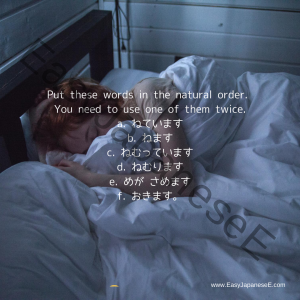
Do you remember the sleep related verbs in Japanese? Let's check out how to use them to describe eac
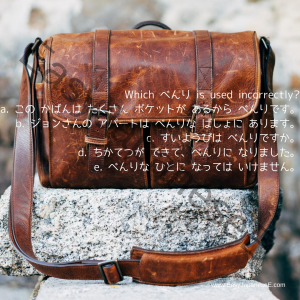
to have

The English verb “to have” has many meanings one of which is to show an ownership. When
しっています vs わかります
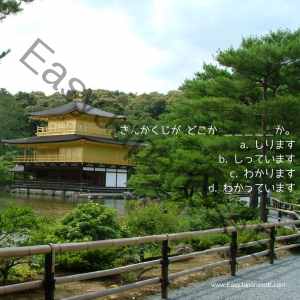
Many English speakers seem to think しっています = to know and わかります = to understand

Don’t use わかっている unless you really mean it!
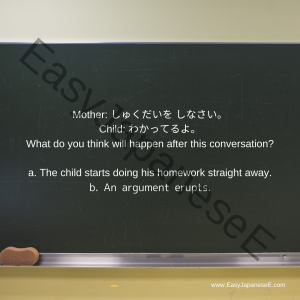
わかっている is made of the てform of わかる but わかっている and わかる give qui
にぎやか vs いそがしい
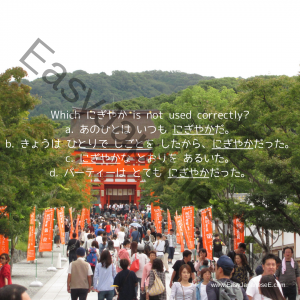
Both にぎやか(な) and いそがしい are usually translated "busy" but the meanings are ve
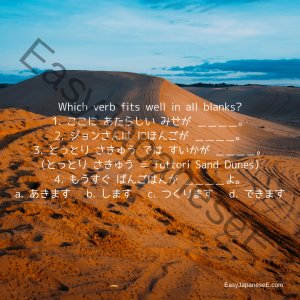
わかる/わかります

The Japanese verb わかる/わかります is often translated as "to understand" but its usage in
大きい vs 大きな
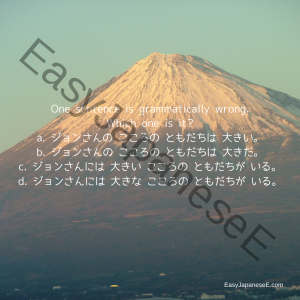
One sentence is grammatically wrong. Which one is it? 大おおきい and 大おおきな both mean

No More Posts